
U.S. Job Market Outlook for Immigrants in 2026: Trends and Predictions
The U.S. job market has always been shaped by global talent, and immigrants continue to play a critical role in fueling innovation, productivity, and economic growth.
As we move toward 2026, the employment landscape for immigrants is evolving due to economic adjustments, technological transformation, and shifting immigration policies. While challenges remain, new opportunities are also emerging for skilled professionals willing to adapt.
This blog explores the key trends, predictions, and practical insights that define the U.S. job market outlook for immigrants in 2026.
Understanding the Economic Context of 2026
The U.S. economy entering 2026 is expected to be more stable than the post-pandemic years, yet more selective in hiring. Employers are prioritizing efficiency, automation, and skill-based recruitment over large-scale hiring.
For immigrants, this means competition will be higher, but opportunities will favor those with specialized expertise rather than general skill sets. The era of volume hiring is fading, while value-driven hiring is becoming the norm.
Key Trends Shaping Immigrant Employment in 2026
1. Skills Over Degrees
Employers are increasingly focusing on what candidates can do rather than where they studied. This shift benefits immigrants with strong hands-on experience and niche technical skills.
Key areas seeing demand include:
Certifications, project portfolios, and real-world experience will carry more weight than traditional academic credentials.
2. Selective Sponsorship for Work Visas
Visa sponsorship is becoming more strategic. Companies are sponsoring fewer candidates but investing more in those who bring high-impact skills.
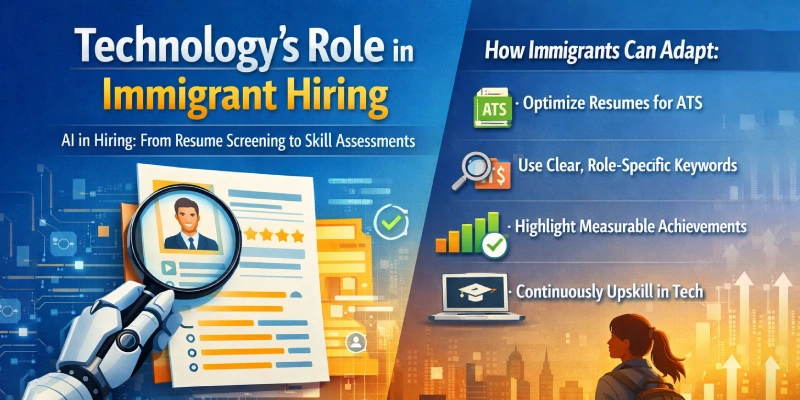
Technology's Role in Immigrant Hiring
AI and automation are no longer future concepts—they are now core to hiring processes. From resume screening to skill assessments, AI tools are shaping who gets noticed.
How Immigrants Can Adapt
To remain competitive, immigrants should:
At the same time, human decision-making still plays a crucial role, especially in interviews and leadership roles.
Industries Offering Strong Opportunities in 2026
While some sectors may slow down, others will actively seek immigrant talent due to workforce shortages and rapid innovation.
Aging populations and digital health adoption will drive demand for doctors, nurses, technicians, and health IT professionals.
Cloud computing, AI integration, and cybersecurity remain critical to business operations.
Government infrastructure projects will create steady demand for skilled labor and engineering roles.
Universities and research institutions continue to attract global talent, especially in STEM fields.
States with strong immigrant job prospects include:
These regions benefit from diverse industries, startup ecosystems, and higher rates of visa sponsorship.
Challenges Immigrants May Face
Despite opportunities, immigrants in 2026 will still encounter structural and policy-related hurdles.
Common Challenges Include:
These factors make career planning more important than ever for immigrant professionals.
Strategies for Immigrants to Succeed in 2026
Success in the 2026 job market will depend on adaptability, continuous learning, and strategic planning.
| Practical Steps | Expected Impact |
|---|---|
| Invest in in-demand certifications | Increased marketability and competitiveness |
| Build a strong LinkedIn and professional network | More job opportunities and visibility |
| Gain experience with AI tools relevant to your role | Enhanced technical skills and adaptability |
| Stay informed about immigration policy updates | Better preparedness for regulatory changes |
Rather than applying broadly, focusing on targeted, high-fit roles will yield better results.
The Rise of Hybrid and Global Work Models
Hybrid and remote work models are reshaping employment options for immigrants. Some professionals may combine U.S. roles with offshore or global project-based work.
This flexibility allows immigrants to:
While not a replacement for U.S. employment, remote work can act as a strategic buffer.
Long-Term Outlook: Is 2026 a Good Year for Immigrants?
The U.S. job market in 2026 is neither easy nor closed. It is selective, skills-driven, and technology-centric. Immigrants who align their expertise with market demand, understand hiring technologies, and plan proactively will continue to find rewarding opportunities.
Those relying solely on traditional job search methods may struggle, but professionals who evolve with the market will remain competitive.
Final Thoughts
Immigrants have always been a backbone of the U.S. workforce, contributing innovation, resilience, and global perspective. In 2026, success will favor those who think strategically, learn continuously, and adapt confidently.
The road may be complex, but for prepared professionals, the U.S. job market still holds meaningful promise.